
A paper bridge bends under its first load. A child pauses, folds the paper differently, and tries again. This time, the bridge holds.
It may look like a simple classroom activity, but there’s a great deal of thinking behind that moment. The child has noticed a problem, considered a possible solution, tested an idea, and used the result to make a change. That’s what thoughtful STEM learning can offer: opportunities to turn curiosity into understanding.
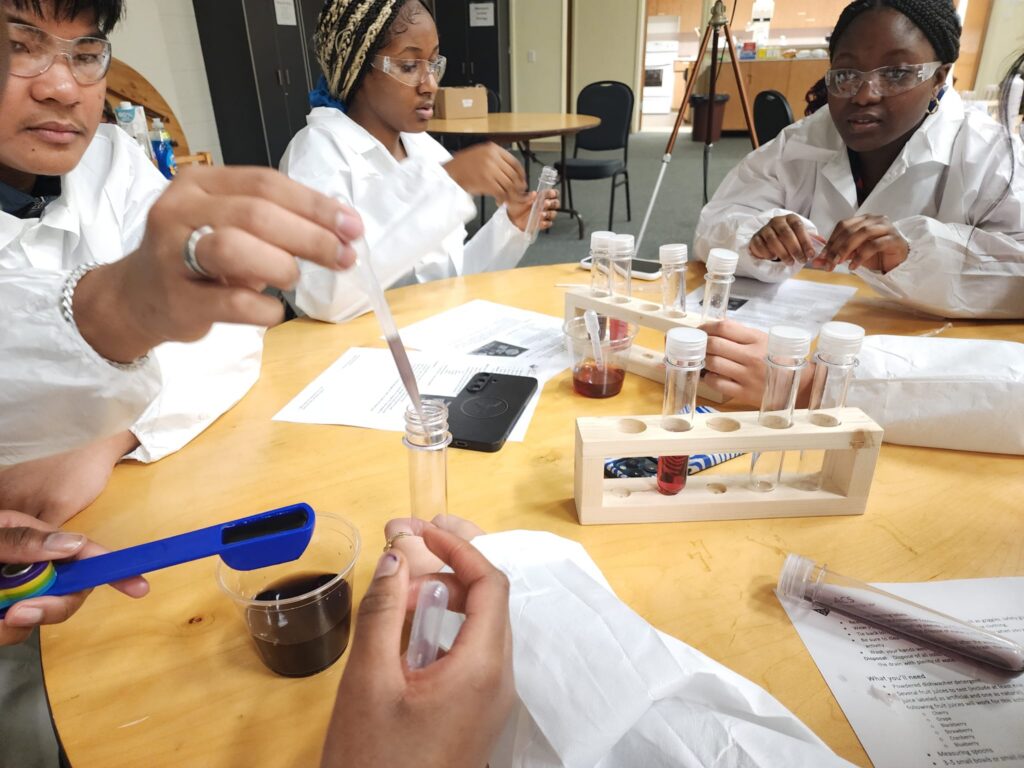
STEM stands for science, technology, engineering, and mathematics. Activities can include building structures, investigating plant growth, exploring patterns, measuring shadows, or writing a simple computer program. They don’t always require screens, expensive equipment, or a laboratory. What matters is having a meaningful question, suitable materials, and guidance that helps children understand what they discover.
One important advantage is making abstract ideas easier to explore. Measuring the length of a paper bridge gives numbers a purpose. Comparing how different shapes support a load connects geometry with a physical result. Children can see, describe, and measure something that might otherwise remain a diagram in a textbook.
These connections need thoughtful teaching. The National Academies’ report on integrated STEM education explains that learners often need explicit support to connect an activity with the concepts behind it. A busy classroom isn’t automatically a learning classroom; questions, explanations, and reflection help make the experience worthwhile.
STEM activities also give children practical opportunities to reason with evidence. Imagine asking which paper shape makes the strongest bridge. Rather than choosing a favourite and defending it, children can test several designs, keep the distance between supports consistent, and compare the results. They begin to distinguish between “I think this will work” and “Here’s what our test showed.”
That distinction matters. Learning to ask what supports an explanation is a useful habit when encountering information in school and everyday life.
There’s room for creativity, too. An engineering challenge rarely has only one possible design. Two children given the same materials may create very different solutions. One might strengthen a structure with folds; another might change its shape or redistribute its supports. Discussing these choices shows that creativity involves both imagination and careful decisions.
An unsuccessful attempt can become useful information. A tower that falls gives children something specific to investigate: Was the base too narrow? Was the weight uneven? What could change next time?
This doesn’t mean frustration automatically builds resilience. Children need manageable challenges, encouragement, and permission to revise their work. An adult’s response can make a difference: “What did you notice?” opens a more useful conversation than simply announcing that the design failed.
Group activities create opportunities to practise communication. During a shared project, children may explain a prediction, listen to another suggestion, agree on a test, or describe what happened. Rotating responsibilities—such as building, measuring, recording, and reporting—can help each participant contribute. Collaboration works best when every child has a meaningful role.
STEM can also give mathematical skills a clear purpose. Children might count materials, compare quantities, calculate distances, or display findings in a graph. A plant investigation, for example, can involve recording growth over time and discussing why measurements differ.
Research also reminds us to keep expectations realistic. In a randomized study involving 1,540 preschool children in India, mathematical games improved the intuitive skills being practised, with lasting benefits in those areas. However, the children did not show an advantage in their subsequent learning of formal school mathematics. The lesson is useful: engaging activities can support particular skills, but broader learning should not be assumed without evidence.
Another valuable opportunity is helping children participate in subjects they might initially find intimidating. STEM activities should welcome girls and boys equally, including children who don’t already see themselves as “good at science” or “good at maths.” Offering different ways to contribute—through drawing, building, discussing, observing, or recording—can make participation more accessible.
For families, the conversation after an activity can be as interesting as the activity itself. Instead of asking only, “Did it work?”, try:
- What did you expect to happen?
- What surprised you?
- How did you decide what to change?
- What would you like to investigate next?
You don’t need to know every answer. “Let’s find out together” is a perfectly good starting point.
At H3S Academy, hands-on STEM experiences, science workshops, mathematics enrichment, and community learning activities provide opportunities to explore. Families can browse workshops and events and check each session’s details, or email contact@h3sacademy.com with questions.
The next discovery might begin with a paper bridge, a pattern, or a question nobody expected. Give children time to investigate—and listen closely to how they explain what they find.
